Keeping on going, and realising my resilience
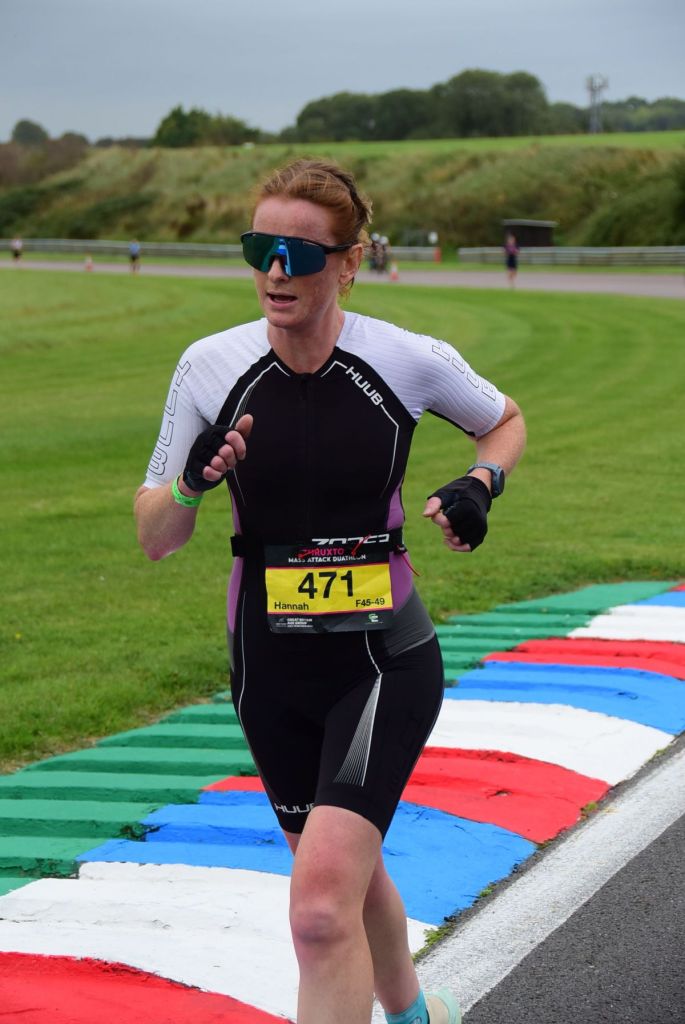
Today is World Mental Health Day, and ordinarily I might post something about journalism and mental health, since this is my work. However, it’s also less than a week since I learned that I have qualified to represent Great Britain for my age group in sprint duathlon (run-bike-run). These two facts might seem unconnected, but it’s not long since my mental health was so poor that I would frequently question how I might get through the day. In my darkest period, I felt so hopeless, so alone, so ashamed, that I contemplated suicide. Never in my wildest dreams could I have imagined that I would find the resilience, motivation and determination to train so I would be good enough to compete at the World Championships in my chosen sports.
It’s no exaggeration to say that running has been a key factor in saving my life and that since discovering cycling, I have found a new sense of peace and freedom.
I have been running for about 25 years, but in the past few years it has taken on a special significance. In 2019, I was diagnosed with post-traumatic stress disorder, resulting from multiple traumas connected with my work as a journalist. My diagnosis came after several years of symptoms, which affected my mental health, including nightmares, anxiety, hyper-vigilance, irritability and avoidance of anything that reminded me of my traumas.
Running has long been shown to benefit our mental health, and it had helped me prior to my diagnosis. But during the pandemic, in the months that followed my diagnosis, when the world plunged into uncertainty, it became a tether for me. Running helped me process the traumas I survived, which included several sexual assaults, and helped me see I was not to blame for what happened to me.
I realised I had been trying to outrun my past, so instead I learned to reframe what running could mean to me. I started to see it as a form of mindfulness, where I could focus on my immediate surroundings, the sound of my breath, each footfall. When times were tough on a run or in a race, I convinced myself to put one foot in front of the other and keep on going. It was an analogy that worked for darker days in my mental health, as well as on the road or trail.
Running also helped me find the words to tell my story and, combined, writing and running have been absolutely wonderful medicine for my well-being. In mid-2020, I spoke about my PTSD, shortly before I moved home to North Yorkshire, close to where I had grown up, a place where I was able to find solace outdoors. Lacing up my shoes, I could be on farm tracks in just a couple of minutes, with wild birds, deer, rabbits and hare keeping me company on my sunrise runs. I would post pictures on social media of my views that helped me, and friends and strangers from around the world would get in contact, telling me how much those images meant to them.
My move home coincided with my decision to become a mental health advocate, to share my story in the hope that others would feel less alone. I have felt isolated and ashamed because of my mental health, and I am determined to help fight the stigma that means too many people struggle in silence.
If coming home helped my mental health, it helped my running too. For the past couple of years, I’ve been supported by a coach, and with his help, I’ve achieved personal best times at every distance from five kilometres to the marathon (42.2km), no mean feat in my mid-40s. But even more importantly, I have really enjoyed my running, and my mental health has improved.
Last year, I dusted down a bike I’d not ridden for more than 12 years. I couldn’t use clip-in pedals at first and lacked a lot of confidence. Thanks to the patience, spare kit and advice of a friend from my village, I persisted and started to improve. I now love the freedom my bike brings. I got injured after running my fastest half marathon in January, and realised cycling might help me recover. As I did, I decided to focus more on duathlons, a multi-sport event in which you run, then cycle, then run.
I’ve always been driven, but since my mental health crisis, I’ve recognised the importance of pacing myself, of finding pleasure rather than just pushing myself relentlessly. It’s allowed me to gain a different perspective on things, but I’ve also learned that, after everything I’ve been through, my mental health is now something I can be proud of, a strength, and not a source of shame.
In my first full year competing in the duathlon, I have succeeded in qualifying to represent Great Britain for my age group at the World Championships in Australia next year. I am over the moon to competing at the sprint duathlon, and am proud of myself, not just for qualifying, but for everything I have overcome to get to this point.
I know I have a mountain to climb between now and the World Championships next August. I’ll need to train hard and smart. I’ll also need to pace myself, and to ensure that I maintain a healthy balance between my training, my work and my family life.
While a lot of it rests on my shoulders, I’ll also need to seek out support to upgrade my kit and fund the trip. In mental health terms, I have done a lot of work myself too, but I can’t do it alone, just like I can’t in my sport. I have had to lean on others and I’m grateful to friends and family, as well as those who have helped me in a professional capacity.
I know there are likely to be days too when the sun hides stubbornly behind the clouds, when the weather conditions make it tough to train, and when they may be reflected by dark days in my mental health. But if my journey so far has taught me one thing, it’s that if I keep on putting one foot in front of the other, I will move forwards.

